

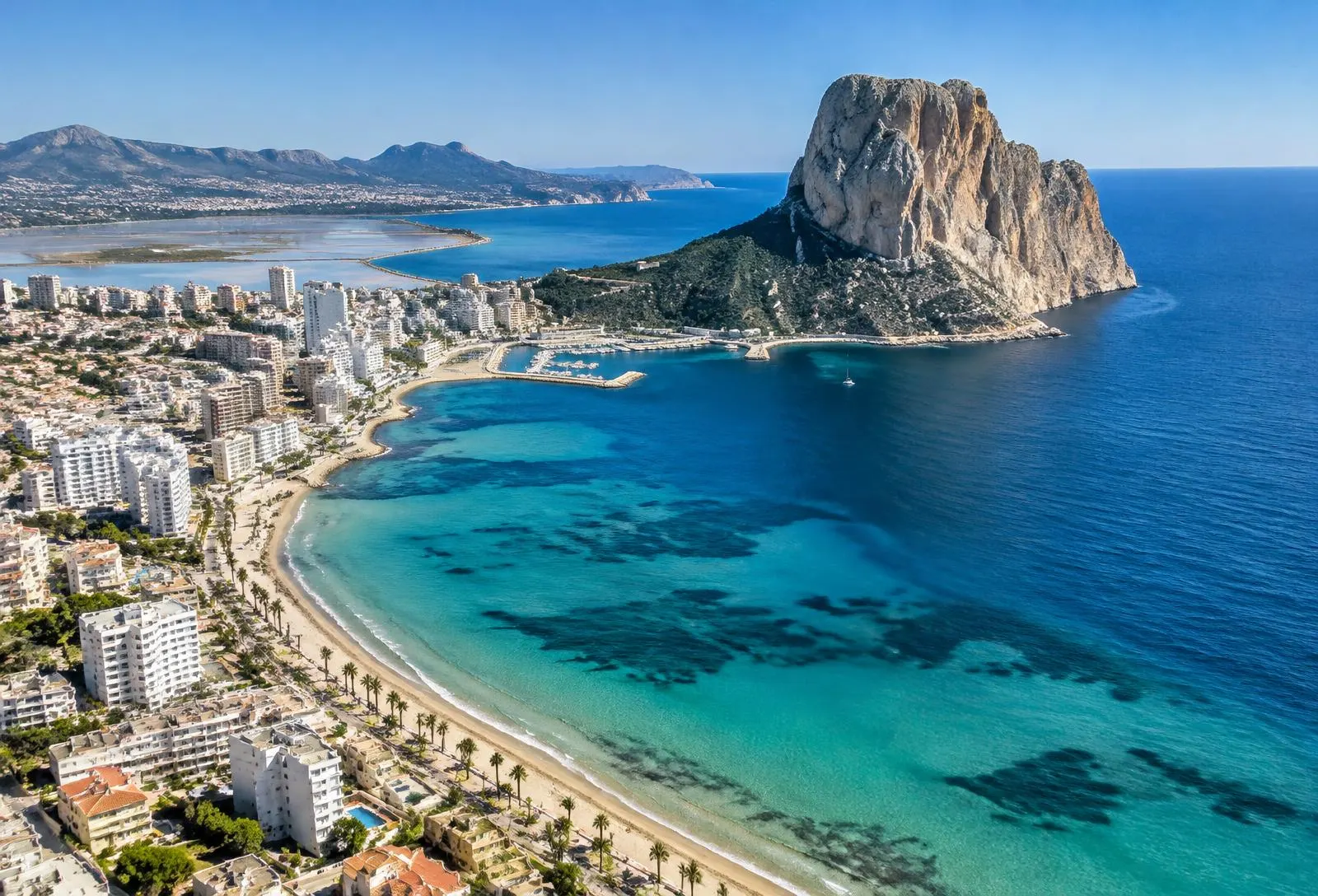
With over 300 days of sunshine, mild winters, excellent healthcare and a huge international community, Spain’s Mediterranean coast is one of Europe’s top retirement destinations. But before you choose your new home, there are three essentials to sort out: your residency permit, access to healthcare, and how your pension will be taxed.
In short
- EU citizens: just register, prove sufficient funds and have health insurance.
- Non-EU: non-lucrative residence visa, with €28,800 annual income (plus €7,200 per dependent) in 2026.
- Healthcare: with the S1 form from your country, you get free access to Spain’s public health system.
- If you spend more than 183 days a year in Spain, your pension will be taxed here.
Step 1: Getting permission to live here
If you’re a citizen of the EU, EEA or Switzerland
You can live in Spain without a visa. If you’re staying for more than three months, you must register with the Central Register of Foreigners and get your EU citizen registration certificate. For retirees, the requirements are:
- Proof of sufficient resources (your pension, savings or other income).
- Health insurance: the S1 form from your country or a private policy.
- Registration on the local census (empadronamiento).
If you’re from outside the EU
The usual route is the non-lucrative residence visa. For 2026, you’ll need:
- Income or savings of at least €28,800 per year (400% of the IPREM, Spain’s income index), plus €7,200 for each dependent.
- Private health insurance from a provider authorised in Spain, with no co-payments or waiting periods.
- Police clearance and a medical certificate.
- You cannot work in Spain.
Buying a property no longer grants residency: the so-called golden visa ended on 3 April 2025. More details in our guide: buying property in Spain if you’re from outside the EU.
Step 2: Healthcare
This is often the biggest factor in a retiree’s budget:
| Your situation | How you access healthcare | Cost |
|---|---|---|
| You receive a state pension from an EU, EEA, Swiss or UK scheme | S1 form registered with Spanish Social Security | Free: your home country pays |
| Resident without S1 or contributions | Special agreement with public healthcare (after one year registered locally) | €60/month under 65; €157/month from 65 |
| Any resident | Private health insurance | From around €150–300/month from age 60 |
With the S1 you get the same cover as a Spanish pensioner, including reduced prescription charges. Request the form from your home country before moving. Full details, plus hospitals on each coast, in our guide to healthcare in Spain for foreign buyers.
Step 3: Tax on your pension
If you spend more than 183 days a year in Spain, or move your life here, you’ll become a tax resident. From that point:
- You must declare all your income in Spain, including your foreign pension.
- Private pensions and most state retirement pensions are taxed here; civil service pensions are usually taxed in your home country, depending on the tax treaty.
- Personal tax allowances increase with age: the general allowance rises at 65 and again at 75.
- You must declare overseas assets worth over €50,000 per category using modelo 720 (the Spanish overseas assets declaration).
A tip every adviser mentions: if you plan to cash in a pension lump sum or sell your home in your country, do it before becoming a Spanish tax resident, or plan carefully. More in our guide: tax residency in Spain: the 183-day rule.
Step 4: Choosing your coast
The three coasts we cover all offer great climate, services and an international community. The pace, scenery and prices vary:
| Coast | Best if you want | New builds from |
|---|---|---|
| Southern Costa Blanca (Torrevieja, Orihuela Costa, Guardamar) | Flat terrain, year-round services, large international community and the most affordable prices | €149,500 |
| Northern Costa Blanca (Jávea, Dénia, Calpe, Altea) | Mountain and sea landscapes, charming towns, quieter atmosphere | €333,000 |
| Costa Cálida (Mar Menor, Los Alcázares, Mazarrón) | Calm waters, golf, relaxed pace | €182,750 |
| Costa de Almería (Vera, Mojácar, Pulpí) | The quietest coast and the lowest buying costs | €190,000 |
If you’re unsure, our local area guides can help: Southern Costa Blanca, Northern Costa Blanca, Costa Cálida and Costa de Almería.
Step 5: Choosing a home for the next 20 years
The property that suits you at 62 might not at 80. Here’s what we recommend considering:
- Accessibility: lift access to the garage, ground floor or single-level bungalow, no internal stairs.
- Walking distance to supermarket, pharmacy and health centre.
- Travel time to the nearest hospital, not just the local surgery.
- Proper heating: winters are mild, but older homes without insulation can be cold. New builds with aerothermal heating and underfloor heating make a real difference in January.
- A community with year-round life, not just in August.
- Airport within an hour for family visits.
Visit the area in February, not just summer: you’ll see what’s open, how many people live there year-round, and how homes feel in winter. We can organise a viewing trip with an adviser in your language.
Your first six months
- Register on the local census (empadronamiento): almost everything else depends on this.
- Sort your residency: EU registration certificate or residence card.
- Register your S1 with Social Security and apply for your health card (the SIP card in the Valencian Community).
- Open or update your bank account as a resident.
- Check your driving licence: if it’s from the EU it remains valid; if not, check if you need to exchange it and by when.
- Make a Spanish will for your assets here, choosing your home country’s law if you wish. More info: inheritance of property in Spain.
- Find a tax adviser before your first Spanish tax return.
Want to crunch the numbers for a specific property? A Homiia adviser will reply in your language within 24 hours, with no obligation and no commission.
Speak to an adviser · Download the free guide
Frequently asked questions
What does a European retiree need to live in Spain?
Register with the Central Register of Foreigners and get the EU citizen registration certificate, showing sufficient funds and health insurance (the S1 from your country or private cover).
How much money do I need for the non-lucrative visa in 2026?
€28,800 per year for the main applicant (400% of the IPREM) and €7,200 for each dependent, plus private health insurance with no co-payments.
Will I get free public healthcare as a foreign pensioner?
Yes, if you receive a state pension from an EU, EEA, Swiss or UK scheme and register the S1 form with Spanish Social Security.
Where will my pension be taxed if I retire in Spain?
If you’re a tax resident in Spain, private pensions and most state pensions are taxed here. Civil service pensions are usually taxed in the country that pays them, depending on the tax treaty.
Sources and references
For information only: not legal or tax advice, or a guarantee of returns. Confirm the terms of your transaction with an independent professional.